
Table of Contents
A peaceful nursery supports your baby’s development and your own well-being. Minimalist design rooted in Japanese philosophy—specifically the principles of ma (negative space) and kanso (simplicity)—creates calm environments that reduce overstimulation. Here’s how to build a serene nursery using soft minimalist art prints and intentional design.
Quick Start Guide
If you need to create a peaceful nursery quickly, follow this essential checklist. Each item references the detailed sections below.
Week 1: Foundation
- [ ] Choose paint color in warm white or one soft neutral (Section 2)
- [ ] Remove all non-essential furniture from the room
- [ ] Select one large art print (24″ x 36″) in muted tones (Section 4)
Week 2: Core Elements
- [ ] Paint walls (warm white base + optional accent wall)
- [ ] Order crib in natural wood finish (Section 3)
- [ ] Hang your art print at baby’s eye level—3 feet from floor (Section 1)
- [ ] Add one area rug in natural fiber (Section 3)
Week 3: Comfort Layers
- [ ] Install dimmer switch with warm LED bulbs (Section 7)
- [ ] Add rocker or glider
- [ ] Layer 2-3 linen pillows in coordinating neutrals (Section 6)
- [ ] Hang organic cotton curtains (Section 5)
Week 4: Final Touches
- [ ] Add 1-2 plants on high shelves (Section 5)
- [ ] Place small rug under rocker (Section 6)
- [ ] Set up bedtime corner facing art print (Section 7)
- [ ] Remove anything that doesn’t serve a clear purpose (Section 4)
The One Rule: When in doubt, choose less. You can always add more later, but removing clutter is harder once you’re sleep-deprived with a newborn.
1. Embrace Ma: The Power of Negative Space
Japanese design honors ma—the deliberate use of empty space. Unlike Western design that often fills voids, ma treats emptiness as an active design element. This breathing room allows the eye to rest and the mind to settle.
Start by removing unnecessary furniture. A nursery needs only essentials: crib, changing table, rocker, and storage. Resist the urge to fill corners with decorative pieces. Each empty space serves a purpose—it reduces visual stimulation and creates calm.
Wall space follows the same principle. Choose one or two art prints maximum. The wall itself becomes part of the design. This restraint helps babies process their environment without overwhelm. As they grow, they can focus on and appreciate individual elements rather than scanning chaotic visual fields.
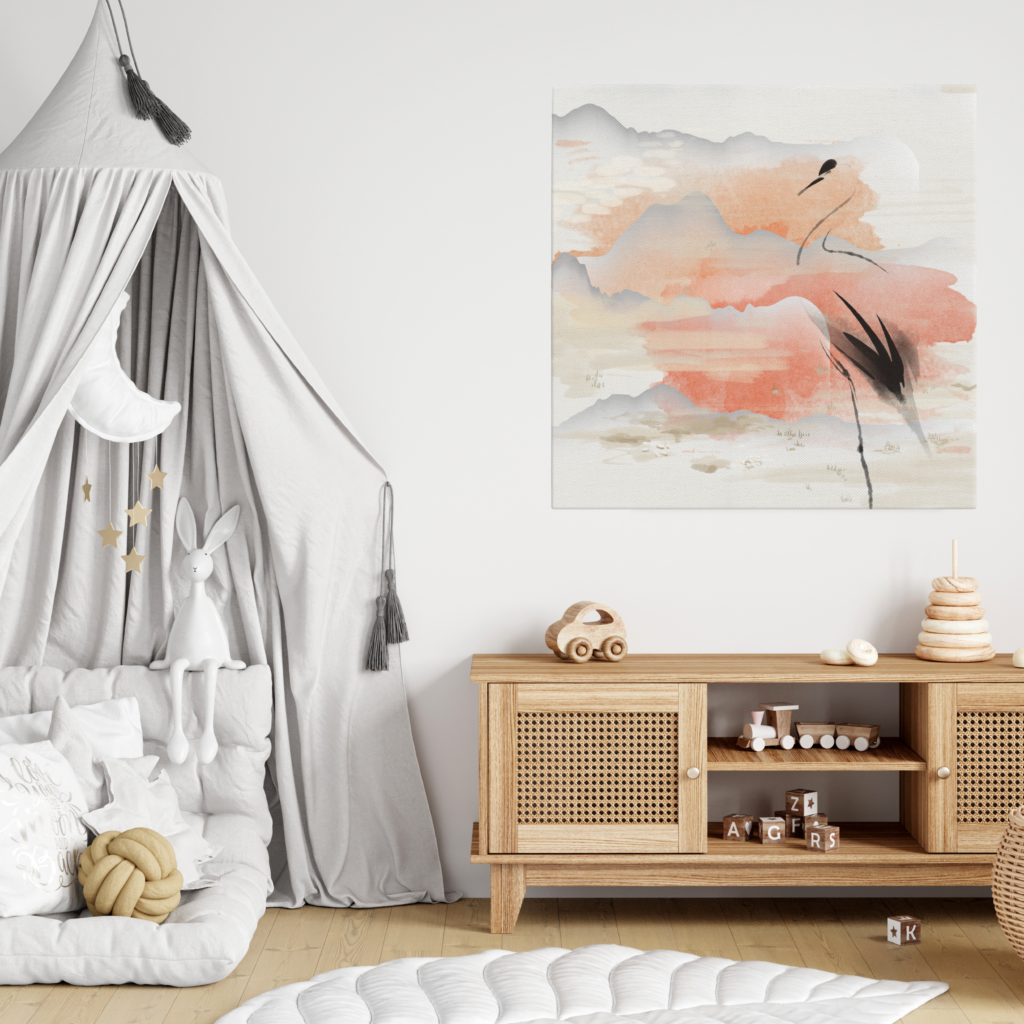
Styling tip: Position a single large-format canvas print (24″ x 36″) on the main wall at baby’s eye level when lying down (approximately 3 feet from the floor). Leave at least 18 inches of blank wall around it. If you want a second piece, place it on a different wall entirely—never cluster art in one area. For storage, choose closed cabinets or baskets that hide contents. Visible clutter destroys the sense of ma, even if items are neatly arranged.
As baby grows (0-2 years):
- 0-3 months: Maximum ma is essential. Newborns see only 8-12 inches and prefer high contrast. Your minimalist space won’t register visually yet, but it benefits you during this exhausting phase. The emptiness gives your mind space to rest.
- 3-6 months: Baby begins tracking objects and seeing color. Your single art print becomes a focal point during diaper changes. They may stare at it for extended periods—this is healthy visual development, not boredom.
- 6-12 months: Baby becomes mobile. Ma serves a safety function now—fewer items means fewer hazards. The empty floor space encourages movement and exploration. Resist adding play mats with busy patterns; use a simple neutral rug instead.
- 12-24 months: Toddlers need some stimulation, but ma still applies. Add a low bookshelf with 5-8 books (rotate weekly). One small basket for toys. That’s sufficient. The principle remains: each item justifies its presence.
2. Choose a Wabi-Sabi Color Palette
Wabi-sabi finds beauty in imperfection and natural tones. This aesthetic celebrates weathered wood, organic textures, and colors that appear in nature without enhancement. Think forest floor after rain, river stones, unbleached linen, morning fog.
Muted colors have psychological benefits beyond aesthetics. Soft beige, sage, clay, and gray create environments that feel safe and contained. These tones don’t demand attention—they recede, allowing the baby to rest. Bright colors, by contrast, stimulate the nervous system and can interfere with sleep.
Your color palette should feel cohesive across all elements: walls, textiles, furniture, and art. Choose three colors maximum and stay within that family. This unity creates visual harmony that translates to emotional calm.
Styling tip: Use low-VOC paint in warm white (Benjamin Moore “Swiss Coffee” or Farrow & Ball “Pointing”) as your base. Instead of stark white—these have subtle warm undertones that soften in natural light. Add one accent wall in soft sage (try “Silver Sage” by Behr) or warm greige (“Accessible Beige” by Sherwin Williams).
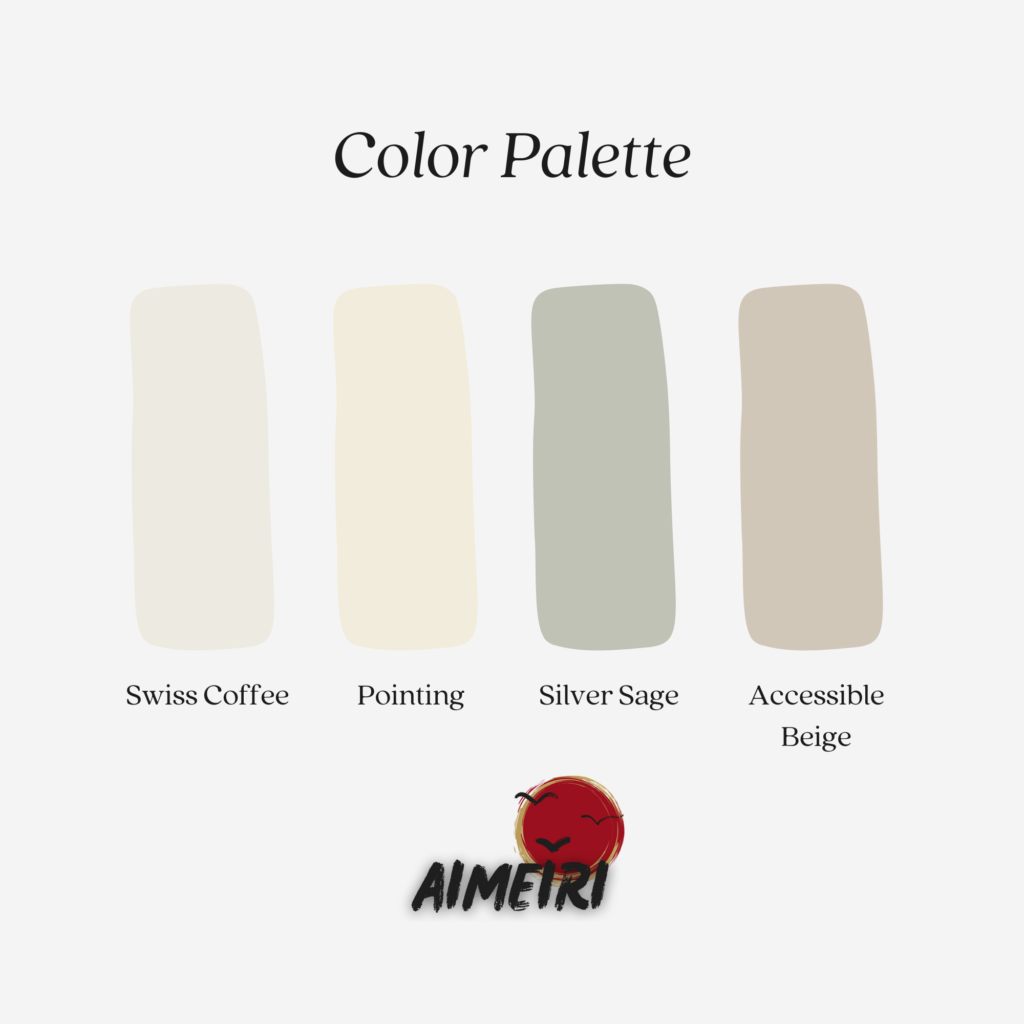
Choose art prints in analogous colors—stay within a 3-color range. For example: cream + soft green + warm tan, or warm gray + beige + pale clay. Test paint samples in both morning and evening light before committing. Colors shift dramatically depending on natural light exposure and the time of day. Live with samples for at least 48 hours.
As baby grows (0-2 years):
- 0-6 months: Maintain your wabi-sabi palette strictly. Babies don’t need color variety—they need visual calm. Well-meaning gifts in bright colors can be stored elsewhere.
- 6-12 months: You can introduce one additional muted tone through textiles if desired—perhaps a soft terracotta or dusty blue in a throw blanket. But keep it subtle. The base palette stays unchanged.
- 12-18 months: As baby becomes a toddler, you may feel pressure to add “fun” colors. Resist. Studies show children sleep better and play more calmly in neutral environments. If you want color, add it through natural elements: a vase with fresh greenery, wooden toys in natural finish.
- 18-24 months: If transitioning to a toddler bed, maintain the same color palette. Consistency across this developmental change helps children feel secure. The familiar colors signal “this is still my safe space” even as the room’s function evolves.
3. Integrate Natural Materials
Japanese design values organic textures over synthetic ones. Natural materials age beautifully, developing patina and character. They also provide tactile variety that synthetic materials can’t replicate. Wood grain, woven fibers, and stone textures engage multiple senses simultaneously.
Natural materials regulate temperature and humidity better than synthetic alternatives. Wood furniture stays cool in summer and doesn’t feel cold in winter. Natural fiber rugs absorb sound and feel pleasant underfoot. These subtle qualities contribute to comfort in ways you notice subconsciously.
Prioritize untreated or minimally treated materials. The goal is to show the material’s inherent beauty, not disguise it. Light wood finishes reveal grain patterns. Raw linen shows natural slubs and variations. These “imperfections” align with wabi-sabi principles.
Styling tip: Select a crib in natural oak, ash, or maple with visible grain patterns. Avoid espresso or painted finishes—they hide the wood’s natural character. Pair with a flat-weave jute rug (6′ x 9′ minimum) in natural tan or a wool rug in cream with subtle texture variation.
Use organic cotton curtains in linen weave—the thicker weave diffuses light beautifully while maintaining privacy. Choose canvas art prints with natural linen texture or raw wood frames (0.75″–1″ thick, light wood finish in oak or maple). Avoid metallic frames, glossy finishes, or ornate molding entirely—these read as decorative rather than natural.
Add smaller natural elements: ceramic vases, stone bookends, bamboo storage baskets. Each material should feel honest and unprocessed.
As baby grows (0-2 years):
- 0-6 months: Natural materials matter most for items you touch frequently: the crib rails you grip during late-night checks, the rocker arms you hold during feeds. Wood feels warmer and more comforting than metal or plastic during these tactile moments.
- 6-12 months: Baby starts touching everything. Natural materials provide varied textures for sensory development: smooth wood, woven basket fibers, soft wool rug. Each material teaches different properties. Plastic toys all feel the same; wooden toys have grain and weight variation.
- 12-18 months: As baby pulls up and cruises, natural wood furniture provides better grip than slick painted surfaces. The slightly textured finish aids their developing motor skills. Stone bookends and ceramic items should move to higher shelves now—keep only unbreakable natural materials within reach.
- 18-24 months: Introduce natural materials through toddler-specific items: wooden puzzles, linen play scarves, cotton dolls. These items align with your aesthetic while serving developmental needs. Avoid plastic storage bins—use woven baskets that blend with the room’s design.
4. Apply Kanso: Radical Simplicity
Kanso means eliminating the unnecessary until only the essential remains. This isn’t deprivation—it’s intentional curation. Each element should justify its presence through function or meaningful beauty. If something doesn’t serve a clear purpose, remove it.
This principle applies especially to art selection. Minimalist art uses restraint to create impact. Simple compositions allow the eye to rest on a single focal point rather than scanning multiple competing elements. Babies benefit from this visual clarity—their developing brains process simple patterns more easily than complex ones.
Look for art with clean lines, subtle gradients, or single-subject compositions. Abstract washes in neutral tones work well. So do simple botanical illustrations featuring one branch or leaf. The subject matters less than the composition’s clarity.
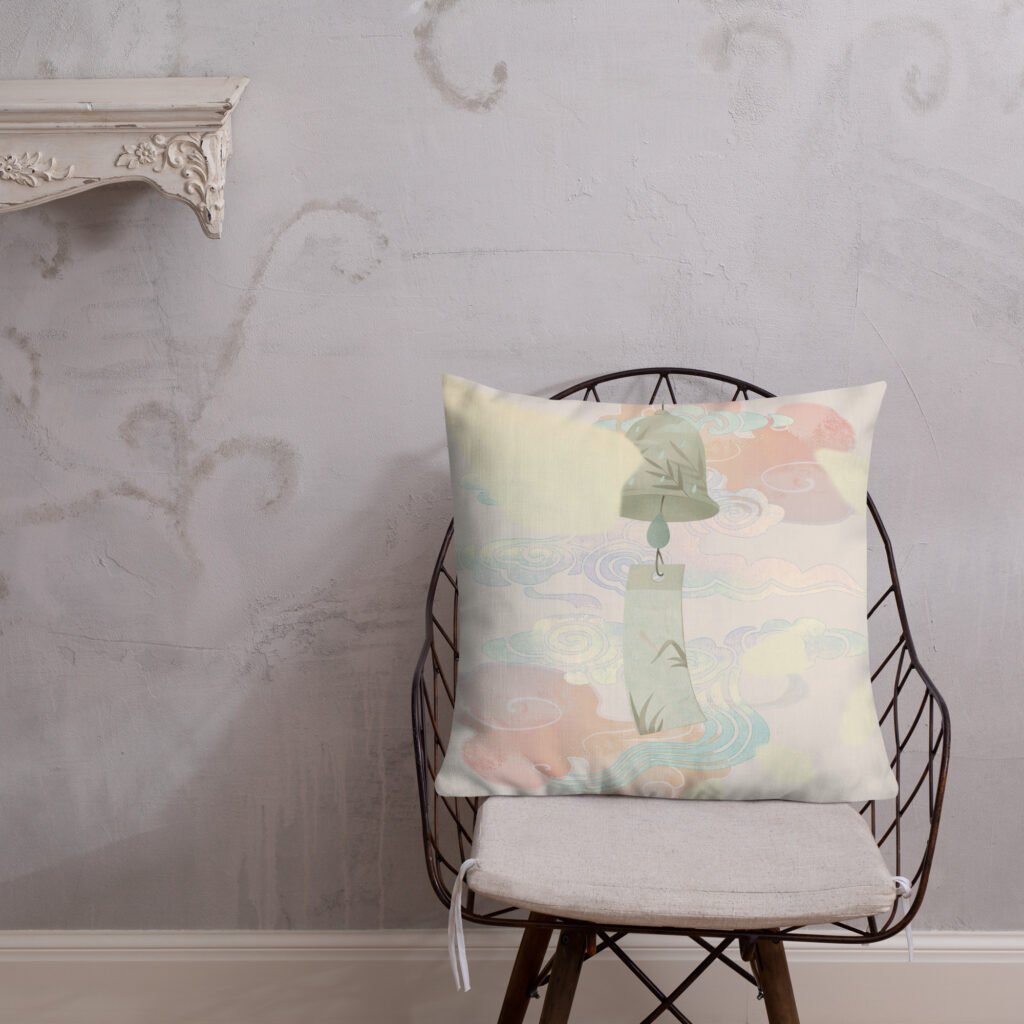
Styling tip: Select art prints with single-subject compositions: a watercolor moon against negative space, an abstract wash in layered neutrals, or a simple line drawing of a single leaf or branch. Avoid prints with multiple elements, text, borders, or decorative flourishes.
Limit yourself to 1-3 total art pieces in the entire room. More than this violates kanso principles and creates visual noise. If creating a gallery wall (not recommended, but acceptable if executed carefully), use identical frames in the same wood tone and maintain 2-3 inches of consistent spacing between pieces. Arrange in a simple grid—three pieces in a horizontal line or a basic triangular composition.
Asymmetry is acceptable in Japanese design, but it must feel intentional and balanced. Avoid random spacing or varying frame sizes, which read as chaotic rather than curated.
As baby grows (0-2 years):
- 0-3 months: One art print is genuinely sufficient. Newborns don’t need visual entertainment—they need calm. Your single carefully chosen piece serves its purpose.
- 3-9 months: Baby begins responding to the art. You might notice them looking at it during diaper changes or from the crib. This sustained attention indicates the single focal point is working. Don’t interpret their interest as a need for more stimulation.
- 9-15 months: Early walkers benefit from kanso’s clear visual field. Busy walls distract; simple walls allow them to focus on physical tasks like pulling up or cruising. The art print provides a reference point without demanding attention.
- 15-24 months: You can introduce a second small piece if desired, but only if it serves a purpose. For example: a low-hung print near the changing table that toddler can look at during diaper changes. Position it at their standing eye level (approximately 30 inches). This should complement, not compete with, your main piece. Same frame style, same color family, same aesthetic approach.
5. Honor Shizen: Bring Nature Indoors
Shizen celebrates naturalness and authenticity. In Japanese philosophy, nature represents perfection—humans don’t need to improve it, only appreciate and integrate it. Bringing natural elements indoors creates connection to larger cycles and rhythms beyond the nursery walls.
Living plants provide multiple benefits. They improve air quality by filtering toxins and releasing oxygen. They introduce gentle movement through leaves responding to air currents. They change subtly over time, teaching impermanence. For babies, plants offer safe visual interest—organic shapes and natural green tones that don’t overstimulate.
Nature-inspired art reinforces this connection. Images of organic forms—water, clouds, branches, stones—evoke calm because humans evolved surrounded by these patterns. Our nervous systems respond positively to natural imagery even when we can’t articulate why.
Styling tip: Place 1-2 medium plants (12″ pots) on high shelves or wall-mounted brackets out of baby’s reach. Snake plants (sansevieria) and pothos are nearly indestructible and thrive in low light. Peace lilies and spider plants also work well. Avoid succulents—they read as decorative rather than naturalistic in this context.
Choose art prints with watercolor botanicals in muted greens and tans, or abstract landscapes suggesting natural elements without literal representation. A soft gradient evoking sky or water works beautifully. Avoid photorealistic nature prints or vivid colors—these feel decorative rather than natural.
Hang sheer cotton curtains (not synthetic sheers) to filter natural light softly. The goal is dappled light reminiscent of being under tree canopy. Position the changing table or crib near a window so baby sees natural light shifts and shadow patterns throughout the day. These gentle movements are inherently soothing and help establish circadian rhythms.
As baby grows (0-2 years):
- 0-6 months: Natural light exposure during wake windows helps regulate sleep. Position the crib so morning light reaches it—this supports natural wake times. The plants you’ve added contribute oxygen during these early months when baby spends most time in this room.
- 6-12 months: Baby becomes more visually aware of plants. They may reach toward them or watch leaves move in air currents. This is excellent visual tracking practice. Ensure plants remain out of reach but visible. Watering plants can become part of your morning routine together—teaching gentle observation of living things.
- 12-18 months: Consider adding a very simple nature table at toddler height: a low shelf with 2-3 natural objects (pinecone, smooth stone, shell) that change seasonally. This extends shizen principles through hands-on exploration. Keep it minimal—three objects maximum, rotated monthly.
- 18-24 months: Nature-inspired art can evolve to include more detailed botanical prints or simple seasonal images. A spring print might show cherry blossoms, a winter print could depict bare branches. This rotation teaches seasonal awareness while maintaining the peaceful aesthetic. Store off-season prints flat in acid-free tissue.
6. Create Seijaku: Stillness and Calm
Seijaku represents active tranquility—not the absence of energy, but energy at rest. This differs from mere quietness. Seijaku suggests readiness, presence, and centered calm. A room with seijaku feels alive but peaceful, like a still pond or a forest clearing.
Achieve this through layered textures that absorb sound and create tactile richness. Hard surfaces reflect sound and create echo. Soft materials—wool rugs, linen curtains, cotton bedding—dampen noise and make the room feel acoustically gentle. This matters especially during nighttime wakings when every sound feels amplified.
Art contributes to seijaku through subject and technique. Choose images that evoke quietness: misty landscapes where details fade into soft focus, still water reflecting sky, gentle rain, early morning light. Watercolor techniques work particularly well—soft edges and translucent layers suggest contemplation rather than action.
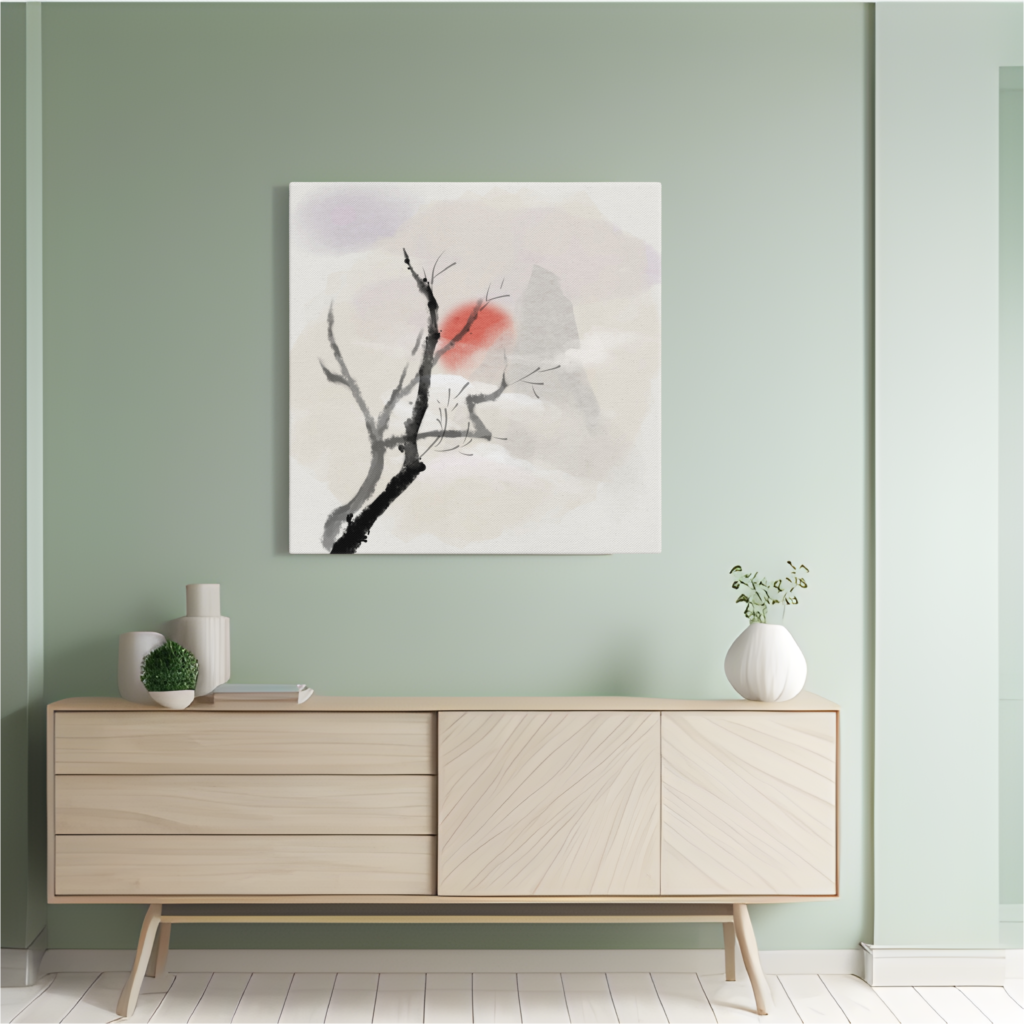
Styling tip: Add a sheepskin or thick wool rug (4′ x 6′ minimum) under the rocker. This creates a defined “calm zone” and feels luxurious underfoot during late-night feeds. The acoustic dampening makes a noticeable difference in how sound travels in the room.
Use linen throw pillows in the rocker—2-3 pillows in coordinating neutrals (cream, warm gray, soft tan) with subtle texture variation. Mix smooth linen with nubby linen or add one pillow in waffle weave. This textural variety engages touch without visual complexity.
Choose art prints with soft focus or watercolor techniques: dawn mist obscuring distant hills, calm seas with gentle gradients from sky to water, abstract washes suggesting rain on windows. These images should feel contemplative and quiet. Avoid geometric patterns, sharp lines, high contrast, or busy compositions. Even beautiful scenes feel agitating if rendered too sharply.
Consider the acoustic properties of the entire room. If the floor is hardwood, cover at least 60% of it with rugs. This significantly reduces noise bounce.
As baby grows (0-2 years):
- 0-3 months: Seijaku benefits parents most during this phase. The quiet room helps you stay calm during night wakings. Every sound feels amplified when you’re sleep-deprived—acoustic dampening through textiles makes a measurable difference in your stress levels.
- 3-9 months: Baby begins vocalizing and responding to sounds. The quiet room allows you to hear subtle changes in their sounds—early communication cues you might miss in a more echo-prone space. Soft surfaces also cushion inevitable falls as they learn to roll and sit.
- 9-15 months: Early mobility means more noise: toys dropping, cruising furniture, babbling practice. Seijaku’s layered textiles absorb these sounds, preventing the room from feeling chaotic. The acoustic calm supports their developing auditory processing—they can distinguish between different sounds more easily without echo and reverberation.
- 15-24 months: Toddlers benefit from quiet spaces to balance their high-energy activity in other areas. The nursery becomes a retreat. Consider adding a small floor cushion in natural linen where toddler can sit and look at books. This extends seijaku to create a dedicated calm zone they begin to recognize and seek out when overwhelmed.
7. Establish Ritual Through Mindful Routines
Japanese culture values ritual as a path to presence and peace. Tea ceremony, daily shrine visits, seasonal celebrations—these practices ground participants in the moment. The same principle applies to nursery routines. Consistent rituals signal transitions, create predictability, and build associations between actions and emotional states.
For babies, ritual establishes rhythm. The same sequence each evening—dim lights, soft song, quiet moment—teaches that sleep follows. The body learns to prepare. Over time, the ritual itself becomes calming because it predicts the peaceful state to come.
Your nursery’s design should support these rituals. Create dedicated spaces for specific activities. The rocker becomes the place for quiet connection. The changing table handles practical needs. The crib is only for sleep, never play. These spatial boundaries reinforce routine.
Styling tip: Install a dimmer switch with warm LED bulbs (2700K color temperature—this mimics candlelight and doesn’t interfere with melatonin production). Create a bedtime corner with your rocker facing the main art print. This positioning matters—you want the art to be visible during quiet moments together.
Before sleep, sit together and describe the art print quietly. Point out gentle details: “See the soft clouds? They’re resting too.” This builds association between the peaceful image and rest. Your voice, the familiar image, and the consistent timing combine into a sleep cue.
Keep this corner minimal—just the chair, a small side table (for water or a book), and the art as the focal point. Don’t add extra decoration here. The simplicity reinforces that this space has one purpose: calm connection before sleep.
Consider adding a subtle scent ritual. A drop of lavender oil on the curtain (out of baby’s reach) each evening creates an olfactory cue. Our sense of smell connects directly to memory and emotion—this association builds quickly and lasts years.
As baby grows (0-2 years):
- 0-3 months: Establish your core ritual now: dim lights, same song, same sequence. Consistency matters more than complexity. Even though newborns don’t have object permanence yet, the ritual benefits you—it creates a predictable structure during unpredictable days.
- 3-6 months: Baby begins recognizing the routine. The dimming light becomes a cue. The quiet moment in the rocker facing the art print becomes familiar. You might notice them relaxing into the sequence even before you reach the crib.
- 6-12 months: Add one element: let baby touch the art print’s frame before bed (if it’s within reach and securely hung). This tactile ritual extends their engagement. The cool wood frame, the smooth surface—these sensory experiences become part of the sleep association.
- 12-18 months: Toddlers can participate more actively. They might point to the art print when you ask “Where do we look before bed?” This cognitive engagement reinforces the ritual’s purpose. The art becomes a sleep cue they understand and anticipate.
- 18-24 months: Consider creating a “goodnight” phrase you say to the art together: “Goodnight moon” or “Rest well, trees.” This language ritual adds another layer. Toddlers love repetition—the predictable words soothe them. Years later, that phrase might still trigger sleepiness through deep associative memory.
Maintenance and Evolution: Keeping Your Nursery Peaceful Over Time
A minimalist nursery requires active maintenance. Without conscious effort, spaces accumulate clutter and lose their peaceful quality. Japanese design philosophy includes regular renewal and reflection—apply these practices to sustain serenity.
Monthly Decluttering Ritual
Set a recurring monthly reminder to evaluate the room. This isn’t deep cleaning—it’s intentional curation.
The process (15 minutes):
- Remove everything that doesn’t belong. Baby gear accumulates: empty diaper boxes, outgrown clothes waiting to be stored, Amazon packaging. Clear it all out. The nursery isn’t a holding area.
- Assess each remaining item. Ask: “Does this serve a current purpose?” A 3-month toy doesn’t serve a 9-month baby. Rotate it out. Clothes two sizes too big belong in storage, not the closet. Visible items should all be currently useful.
- Check for damage or wear. Natural materials age beautifully but can also degrade. Fraying baskets, damaged books, pilling blankets—remove or replace these. Wabi-sabi celebrates natural aging, not neglect.
- Realign items with principles. Did bright plastic toys creep in? Move them to a play area elsewhere. Did decorative items appear on surfaces? Find them new homes. Return the room to its intentional state.
What to do with removed items:
- Outgrown items: Store in labeled bins by size in a different location
- Broken items: Repair if worth the effort, discard if not
- Gift items that don’t fit the aesthetic: Thank the giver sincerely, then donate or store elsewhere. Your child’s sleep environment matters more than displaying every gift.
When to Rotate Art
Art rotation keeps the space fresh without compromising principles. Unlike paint or furniture, art changes easily—use this to your advantage.
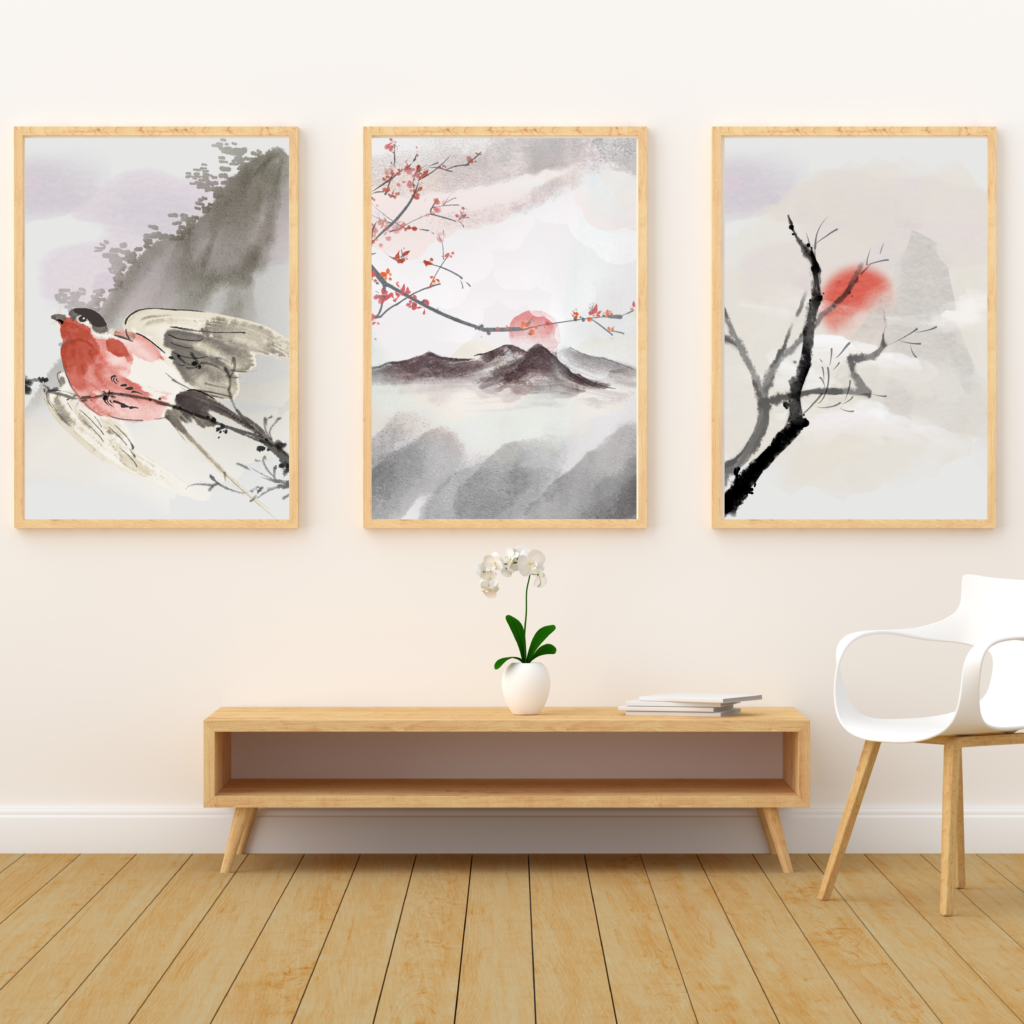
Seasonal rotation (optional but beneficial):
Change your main art print with seasons. This connects the nursery to natural cycles and prevents visual stagnation. Store off-season prints flat, wrapped in acid-free tissue, in a dry location.
- Spring: Soft green tones, cherry blossoms, new growth imagery
- Summer: Warm sandy tones, water scenes, sun-bleached aesthetics
- Fall: Warm terracotta, dried grasses, golden hour landscapes
- Winter: Cool grays, bare branches, misty mountain scenes
Each print should maintain the same minimalist approach—only the subtle color temperature shifts. This creates gentle variety without visual disruption.
When baby shows disinterest:
Around 12-18 months, toddlers develop preferences. If yours stops looking at the art or seems unengaged, consider swapping it for a different subject in the same style. Try abstract shapes instead of landscape, or botanical instead of abstract. Maintain the aesthetic principles while refreshing the specific image.
Signs you should NOT rotate:
- Baby consistently looks at the current print during diaper changes or before bed—this indicates attachment
- The print has become part of your sleep ritual—consistency matters more than variety here
- You simply feel bored—remember, the art serves the child’s needs, not your need for novelty
Handling Gifts That Don’t Fit the Aesthetic
This is the biggest challenge to maintaining a peaceful nursery. Well-meaning relatives gift bright plastic toys, character-themed bedding, busy mobiles.
Your options:
Option 1: The rotation system Keep a “gift display” shelf in the nursery where new gifts live for 2-4 weeks. Take a photo of baby with the item and send it to the giver. Then rotate the item to storage or a play area elsewhere. This honors the gift without permanently disrupting your space.
Option 2: Immediate storage For items that severely violate your principles (flashing lights, loud sounds, harsh colors), photograph with baby immediately, thank the giver, and store the item. If they visit, you can retrieve it briefly. This feels uncomfortable but protects your intentional space.
Option 3: The conversion approach Some gifts can be modified. A bright blanket can line a basket interior (hidden but used). A character toy can live in a closed storage basket. A busy book can join a rotation rather than stay on display.
The conversation: Eventually, you may need to guide gift-giving. Wait until you’ve received 3-4 problematic gifts, then address it gently:
“We’re so grateful for your generosity. We’re keeping the nursery very simple to help [baby] sleep better. If you’d like to give gifts, [baby] would love books, or we’re collecting for their college fund. We’re limiting toys to natural materials—wooden toys from [specific store] work perfectly if you prefer something tangible.”
Most people respond well to specific guidance. They want to give meaningful gifts—help them do that.
Adapting as the Nursery Becomes a Toddler Room
Around 18-24 months, the nursery transitions. Your child needs different functionality: more storage, different furniture height, space for active play.
How to maintain principles during this transition:
Keep the same color palette. This is non-negotiable. Continuity helps children feel secure during big changes. When you add a toddler bed, choose the same wood tone as the crib. New storage should match existing pieces.
Apply ma differently. Empty floor space becomes play space. Clear walls still matter, but now they protect from overstimulation during active play rather than during sleep. The visual calm helps children regulate after high-energy activities.
Simplify toy storage ruthlessly. Toddlers thrive with fewer choices. Research shows that children with fewer toys engage in more creative, sustained play. Keep 8-10 toys accessible, rotate weekly. Store the rest elsewhere. Use closed baskets or cabinets—seeing all toys creates decision paralysis and mess.
Maintain one calm corner. Even active toddlers need retreat space. Keep your rocker and the bedtime art print. This corner remains minimal and quiet—a place to reset when overwhelmed. As children grow, they learn to recognize and seek out this space independently.
Resist the “kid room” aesthetic. Culture pushes bright colors and character themes for toddlers. This isn’t developmentally necessary—it’s marketing. Your child benefits more from a calm environment than from walls covered in cartoon characters. Trust your design choices.
Signs Your Space Needs Attention
Monthly decluttering prevents most issues, but watch for these signals:
- You feel anxious entering the room. This indicates visual or physical clutter has accumulated beyond your awareness.
- Baby seems overstimulated or has sleep disruptions. Environmental factors affect sleep. Evaluate whether new items or changes have introduced visual chaos.
- You can’t find things easily. Even minimalist spaces need functional organization. If you’re hunting for burp cloths or diapers, your storage system needs refinement.
- The room photographs poorly. This sounds superficial but it’s diagnostic. Spaces that photograph well are usually well-composed. If the room looks chaotic in photos, it feels chaotic in person.
When you notice these signs, schedule a dedicated hour to restore the space to its principles. This isn’t failure—it’s maintenance. Japanese temples undergo regular renewal ceremonies. Your nursery deserves the same intentional care.
Final Thoughts
Building a peaceful nursery takes time. Japanese design philosophy emphasizes process over completion. A space evolves gradually, shaped by use and reflection. This approach removes pressure to perfect the room before baby arrives.
Start with paint and one art print. Live with these choices for a week. Notice how morning light changes the wall color. Observe which times of day you spend in the room. Let these observations guide your next decisions.
Add elements slowly, evaluating each addition. After adding a rug, wait. Does it improve the room’s acoustic quality? Does the color harmony still work? Does it serve a genuine need? If yes to all three, keep it. If uncertain, remove it and wait longer.
Japanese design teaches that restraint creates beauty. An empty corner has value—it allows the eye to rest. A single perfect art print matters more than three good ones. Quality exceeds quantity in every measure that matters.
Your nursery doesn’t need to be complete immediately. In fact, it shouldn’t be. As your child grows, their needs change. A newborn needs minimal stimulation. A six-month-old benefits from more visual interest. A toddler requires different considerations entirely. Design for now, knowing you’ll adapt later.
Trust that empty space serves its own purpose. Western culture often interprets emptiness as lack, but Japanese philosophy sees it as potential. Ma isn’t waiting to be filled—it’s complete as is. The blank wall balances the art print. The clear surface allows the wood grain to speak.
In the stillness of a well-designed room, both you and your baby will find peace. Not because the room contains everything you might need, but because it contains only what you do need. This distinction makes all the difference.