
Table of Contents
Japanese design has mastered something many of us crave: spaces that feel calm, intentional, and effortless. At its core is wabi-sabi, the philosophy of finding beauty in imperfection and impermanence. Soft minimalist artwork embodies this perfectly—simple pieces that create atmosphere without demanding attention.
Here’s how to bring that sensibility into your home.
1. Start with Neutral, Nature-Inspired Color Palettes
Traditional Japanese interiors draw from nature’s subtlest moments: the gray of river stones, the beige of dried grasses, the soft green of moss after rain. These are grounding colors.
Modern interpretations of Japanese-inspired home decor might include charcoal sketches on cream paper, abstract art in warm taupe and sage, or watercolors in barely-there blues that recall morning mist. Think about the palette of a traditional tea ceremony room, where muted earth tones create a backdrop for mindful presence rather than visual stimulation.
Avoid stark white-on-white minimalism, which can feel clinical. Japanese-inspired spaces favor warmer neutrals—the color of washi paper, unbleached linen, or weathered wood. Even your “whites” should have undertones of cream or gray. This creates cohesion throughout your space while allowing subtle variations in tone to add quiet depth.
Layer different neutrals together. A sand-colored abstract print above a charcoal linen sofa, paired with a pale green ceramic vase. The variations keep things interesting while the restrained palette maintains tranquility.
2. Embrace Negative Space (Ma)
Ma is one of the most important concepts in Japanese aesthetics, yet it’s completely absent from most Western design thinking. It’s the pause between drum beats in traditional music, the empty space in a flower arrangement, the silence that gives meaning to sound.
In your home, ma means choosing artwork where emptiness is intentional. A single black brushstroke across a large white canvas. A minimal sumi-e painting of Mount Fuji where the mountain itself occupies maybe 20% of the composition, with vast sky above and blank space below. The empty areas are essential in Japanese-inspired home decor.
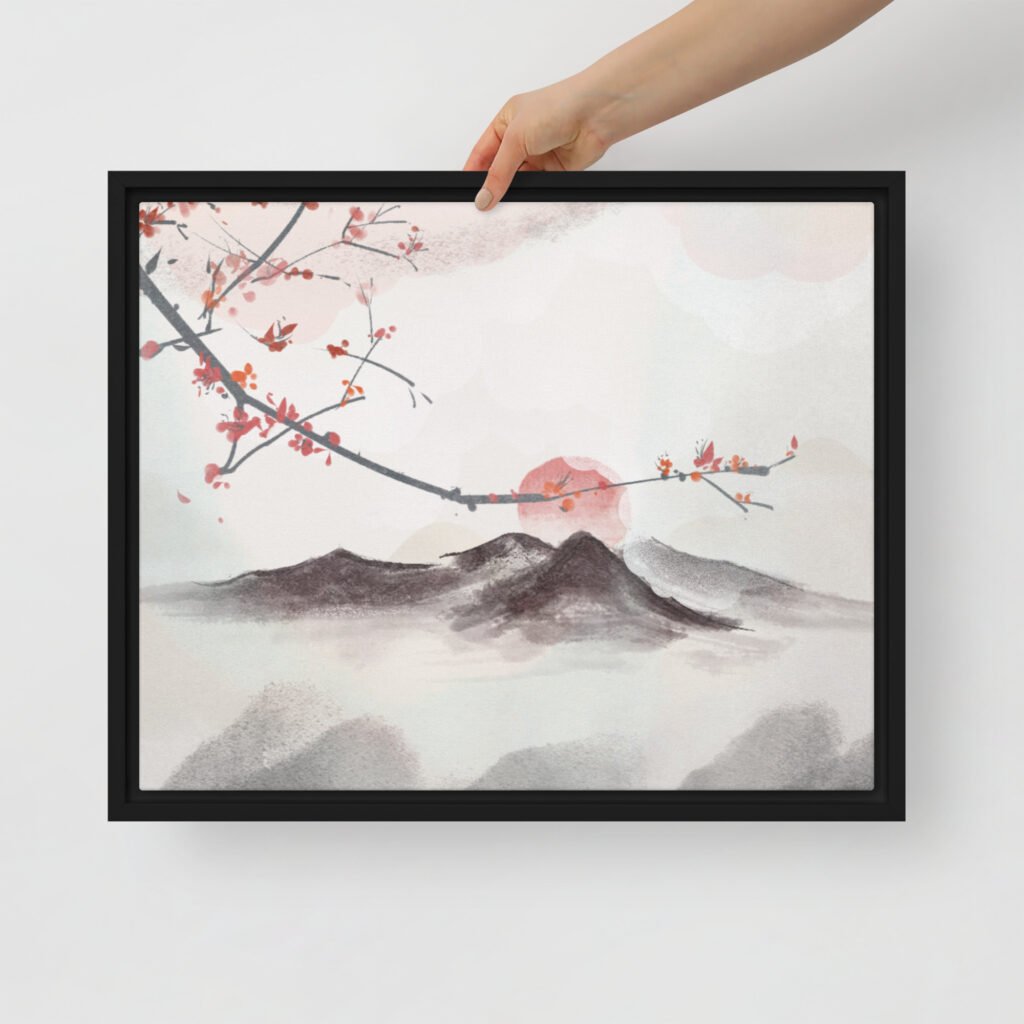
Display matters just as much. A small piece centered on a large wall honors ma. So does a narrow vertical scroll hung with generous space on all sides, the way you’d see in a traditional tokonoma (alcove). Don’t cluster multiple pieces together unless you’re creating a very deliberate asymmetrical arrangement. Let each artwork breathe.
This approach feels radical in Western homes where we’re conditioned to fill blank walls. Resist that urge. The emptiness creates visual rest and makes the art you do display feel more significant.
3. Incorporate Natural Materials and Textures
In traditional Japanese homes, materials are left as close to their natural state as possible. Wood shows its grain. Paper reveals its texture. Clay keeps its earthy finish. This honest approach to materials translates beautifully to contemporary minimalist art and Japanese-inspired home decor.
Seek out artwork on handmade washi paper, which has a subtle texture you can see when light hits it at an angle. The paper itself—made from mulberry, gampi, or mitsumata fibers—has been crafted in Japan for over a thousand years. Modern artists use it for everything from delicate botanical prints to bold abstract ink work.
Linen canvases provide a similar organic quality. The weave is visible, giving even simple artwork—a few charcoal lines, a watercolor wash—added dimension. Pair these with frames in natural oak, walnut, or bamboo. Skip glossy or ornate frames. Simple wood frames with clean lines, or even no frame at all for certain pieces, keeps the focus on natural beauty.
Consider three-dimensional textile art too: a small woven wall hanging in undyed cotton or linen, or a piece of shibori-dyed fabric mounted on a simple wooden dowel. The subtle texture catches light differently throughout the day, creating a living quality without movement.
4. Choose Simple Line Drawings and Brush Strokes
Sumi-e painting, developed by Zen Buddhist monks, is the practice of capturing the essence of a subject with minimal ink strokes. A master painter might render an entire bamboo grove in seven brushstrokes. There’s no going back, no erasing—each stroke must be intentional and complete.
This aesthetic of deliberate simplicity works perfectly in modern spaces. Look for abstract pieces that feature bold, confident brushwork—a single sweeping curve, three intersecting lines, or concentric circles that feel spontaneous yet controlled. The Japanese concept of “iki” (refined spontaneity) applies here: artworks that look effortless but are actually deeply considered.
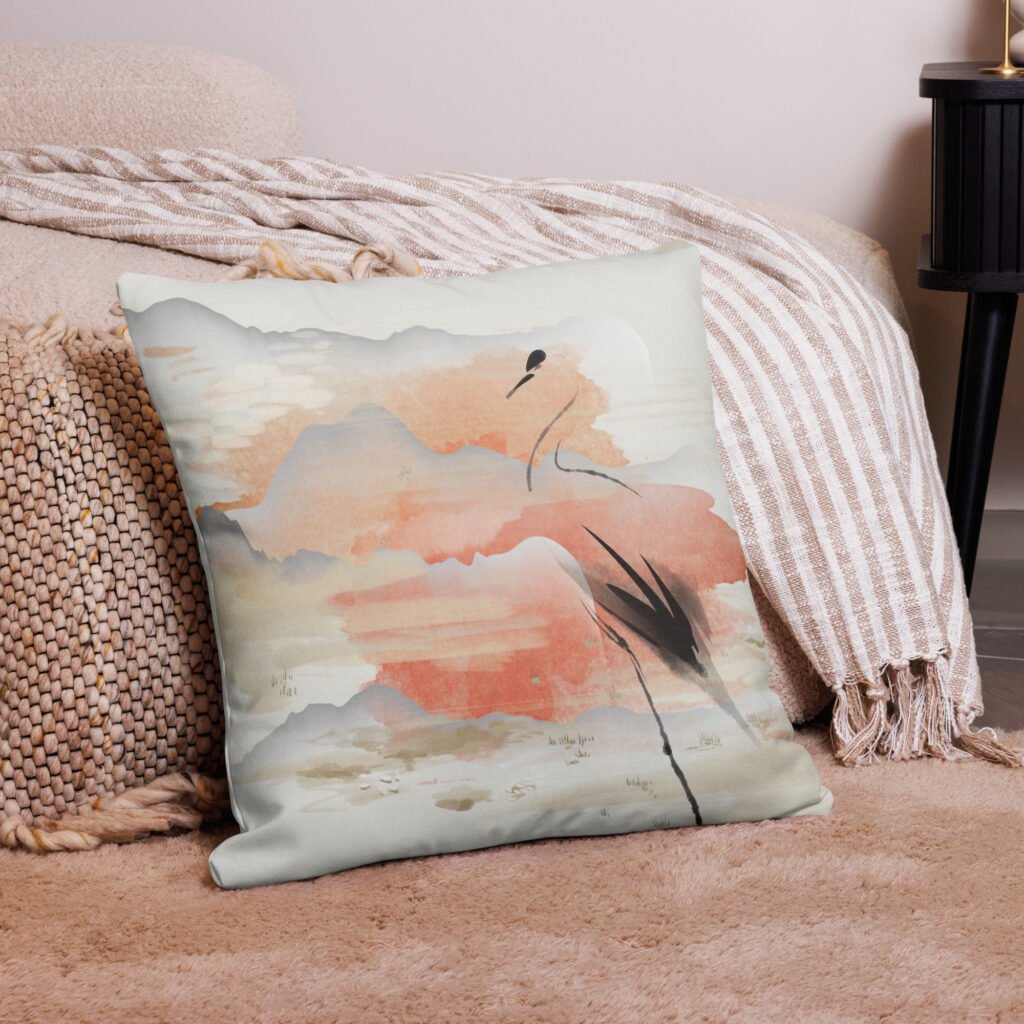
Line drawings work beautifully too. A minimal sketch of a crane in flight, rendered in just a few elegant strokes. Mountain peaks suggested by simple triangular forms. Grasses bending in wind, captured with a handful of curved lines. The art suggests rather than defines, leaving room for your imagination to complete the image.
Even contemporary calligraphy-inspired art fits this principle. You don’t need to read kanji or hiragana to appreciate the visual rhythm of Japanese characters—the balance between thick and thin strokes, the dynamic energy frozen in ink. Choose Japanese-inspired home decor pieces where the composition feels alive, where you can sense the movement of the artist’s hand.
For more information, read our article Styling with Sumi-e Art: 5 Ways to Upgrade a Modern Space with an Ancient Art Form without Feeling Dated.
5. Bring Nature Indoors Through Subtle Botanical Art
The Japanese concept of shakkei (borrowed scenery) involves designing spaces that frame and incorporate views of nature. When you can’t have a garden outside your window, artwork serves this purpose.
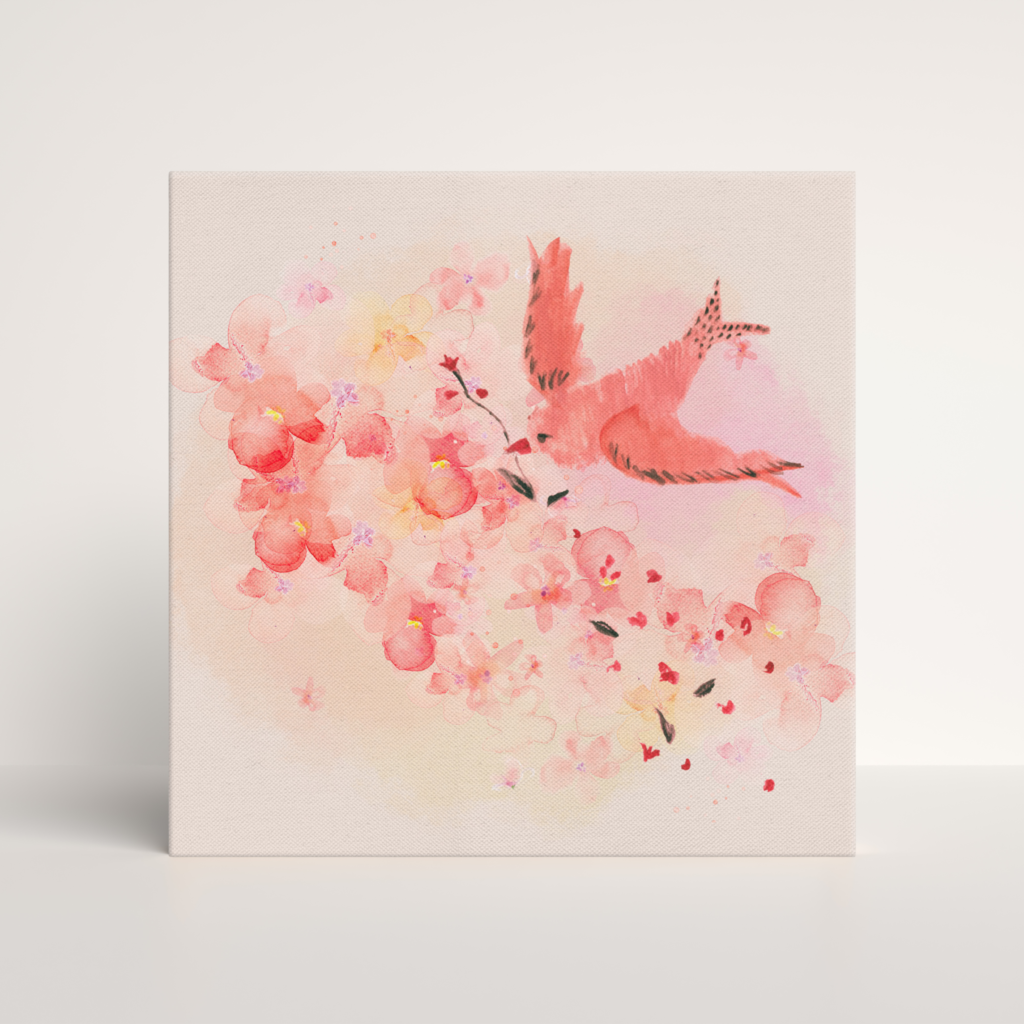
But approach styling with Japanese-inspired home decor with restraint. Instead of bright, photographic florals, choose ink paintings of plum blossoms on bare branches—a traditional subject that represents resilience and the arrival of spring. Cherry blossoms (sakura) are another classic motif, but look for abstract or minimalist interpretations rather than literal reproductions. A few pale pink petals floating across blank space suggests the fleeting beauty of hanami (flower viewing) season.
Bamboo appears frequently in Japanese art for good reason—it bends without breaking, embodying flexibility and strength. A simple vertical composition of bamboo stalks in ink or watercolor brings these qualities into your space without being heavy-handed about symbolism.
Abstract nature works too. Smooth stones rendered in shades of gray. Concentric circles suggesting ripples on water. Organic shapes that recall tidal patterns or wind-sculpted sand. The connection to nature should feel meditative, almost subconscious, rather than decorative or obvious.
Seasonal rotation is traditional in Japanese homes, where artwork changes with the seasons. You might display lighter, airier pieces in summer and deeper, more contemplative work in winter. This keeps your space evolving and maintains your connection to natural cycles.
6. Create Balance with Asymmetrical Arrangements
Western design inherited a love of symmetry from classical architecture—matching pairs of lamps, centered artwork, balanced arrangements. Japanese aesthetics, influenced by Zen philosophy, find symmetry too static, too predictable, even artificial. Nature, after all, is rarely symmetrical.
The principle is called fukinsei, and it creates visual interest while maintaining harmony. Instead of hanging one large piece dead-center over your sofa, try positioning it slightly off-center. Or group three pieces of varying sizes in an asymmetrical triangle—maybe a larger horizontal piece on the left at eye level, with two smaller vertical pieces to the right at different heights.
In a traditional Japanese garden, you’d never find three identical stones placed in a row. Instead, you might find one large stone, one medium, and one small, arranged to create visual tension and balance. Apply this to your art groupings. Odd numbers (three, five, seven) feel more dynamic than even numbers when styling with Japanese-inspired home decor.
This doesn’t mean random placement. The asymmetry is carefully considered. Each piece should feel like it’s in dialogue with the others and with the space itself. Step back and observe how your eye moves through the arrangement. Does it flow naturally, or does it stutter? Adjust until the balance feels intuitive, even if it’s not symmetrical.
7. Layer Lighting to Highlight Your Art
Traditional Japanese architecture uses shoji screens—translucent paper panels that diffuse harsh sunlight into a soft, even glow. Andon lanterns work similarly, casting gentle light that creates atmosphere rather than glare. This approach to lighting transforms minimalist artwork.
Avoid bright overhead lighting that flattens everything. Instead, layer your lighting. Use adjustable picture lights or track lighting to graze artwork at an angle, emphasizing texture. This works especially well with pieces on textured paper or fabric, where side-lighting reveals the material’s depth.
Consider how natural light changes throughout the day. Morning light from the east might illuminate one wall beautifully, while afternoon light from the west highlights another. Position artwork and Japanese-inspired home decor with this in mind. A piece near a window might look completely different at 8 AM versus 6 PM—and that variation is part of its beauty.
For evening, use warm-toned LED strips behind frames to create a subtle backlight, or position a small floor lamp to cast indirect light upward across a wall piece. The goal is to create what the Japanese call “in’ei”—a subtle interplay of shadow and light. Don’t eliminate shadows completely; they add depth and mystery.
Dimmer switches are essential. The ability to adjust light intensity lets you change your space’s mood without changing anything else. Bright for active mornings, dimmed for quiet evenings. The same artwork reveals different aspects of itself under different lighting conditions.
Creating Your Zen Space with Japanese-Inspired Home Decor
Building a zen-inspired home is about thoughtful curation, where each element serves a purpose and contributes to an overall sense of calm. The Japanese concept of “kanso” (simplicity) means eliminating the unnecessary to reveal what’s essential.
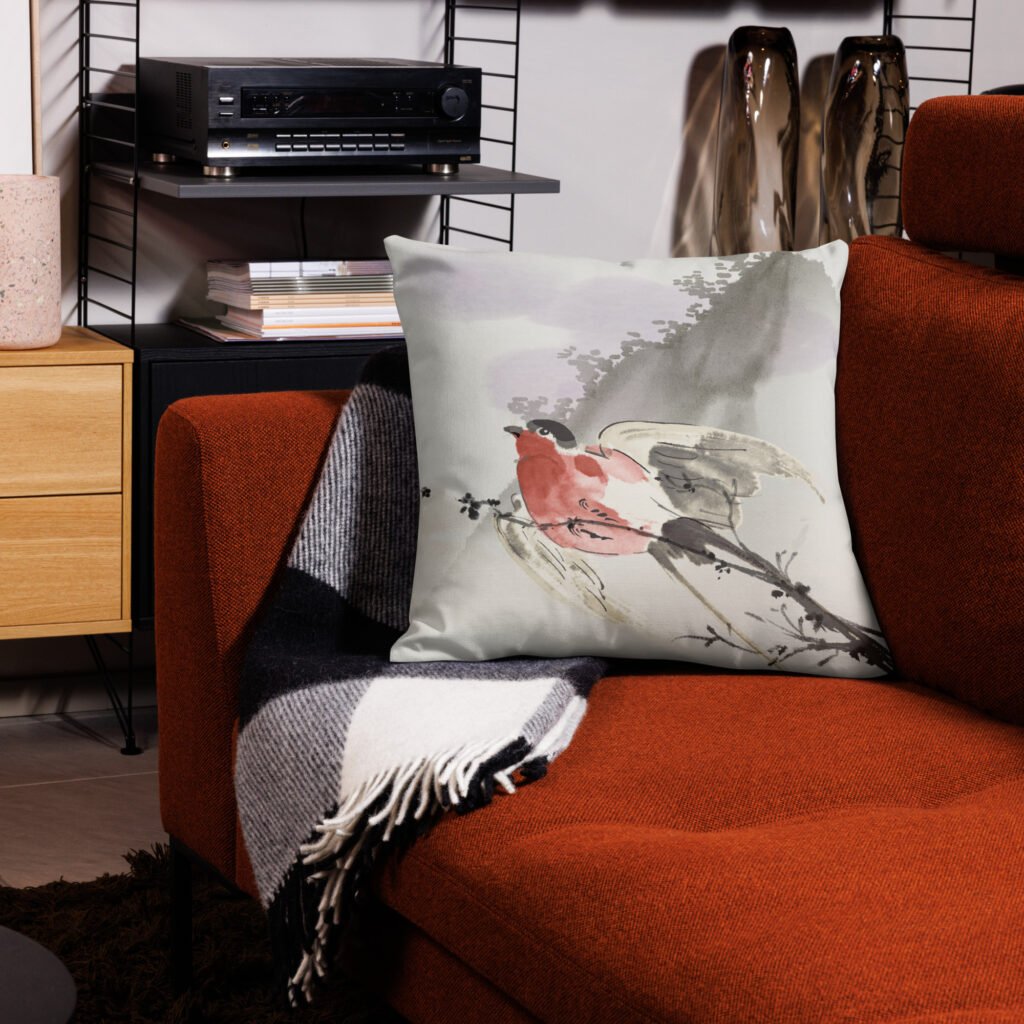
Start with one piece that genuinely resonates with you. Live with it for a while. Notice how it affects the energy of your room, how your eye returns to it, how it makes you feel when you come home. This practice of observation is important. Japanese aesthetics are about how things feel and how they change over time.
Add more Japanese-inspired home decor slowly. You might wait weeks or months before finding the next piece. That’s fine. The Japanese principle of “seijaku” (tranquility) comes from having fewer, more meaningful objects rather than many competing for attention. Each addition should feel like it belongs, not like it’s filling a gap.