
Table of Contents
Modern interiors and Sumi-e are a natural match. The ancient Japanese ink painting tradition fits seamlessly into contemporary spaces because it already embodies what modern design values most: simplicity, intentional negative space, and restraint. Here’s how to style your home with Sumi-e art without making it feel like a museum.
What is Sumi-e?
Sumi-e is the Japanese art of black ink painting. “Sumi” means black ink, “e” means painting. It’s a minimalist practice rooted in Zen Buddhism that emphasizes spontaneity, simplicity, and capturing a subject’s spirit (Ch’i) rather than realistic detail.
The Philosophy: Each brushstroke is final—no corrections allowed. Artists focus on the beauty of individual strokes while using white space (ma) as an active element to suggest depth, movement, and emptiness. Sumi-e art often combines painting with poetry and calligraphy, embodying the Chinese concept of “writing a painting” and “painting a poem.” The practice itself is meditation: it requires focus, breath control, and presence.
Origins and History
Sumi-e originated in ancient China, where writing and painting evolved together. Zen Buddhist monks introduced it to Japan in the 14th century, adapting it into a spiritual practice. During the Muromachi period (1336-1573), masters like Sesshū Tōyō elevated Sumi-e to new artistic heights.
The art form became distinctly Japanese over time, valued for its elegance and philosophical depth. Common subjects—bamboo, orchids, plum blossoms, chrysanthemums (the “Four Gentlemen”), mountains, and birds—are captured with minimal strokes to express their essential nature. Mastery comes through repetition, discipline, and releasing the ego’s desire for perfection.
Five Ways to Style Your Space with Sumi-e Art
1. Embrace the Power of Negative Space
Sumi-e’s power is in restraint. Vast areas of untouched paper create as much impact as the ink, making it ideal for minimalist interiors.
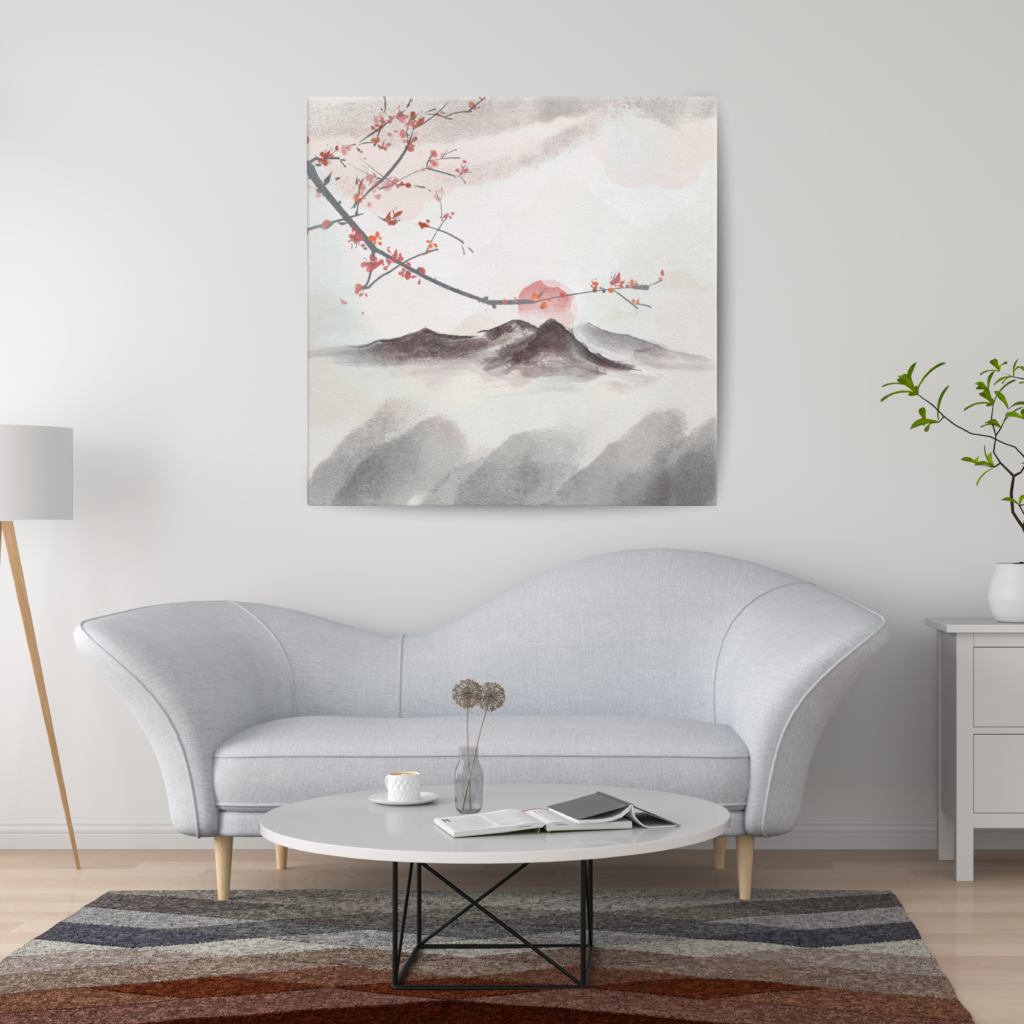
How to make it work: Hang a large-scale Sumi-e art piece on a clean white or neutral wall with plenty of breathing room. Don’t fill the surrounding space with additional decor. Let the painting float in its environment. This works above a low-profile sofa or sleek credenza.
Position the piece at eye level with at least 6-12 inches of clear wall space on all sides. The negative space in your room echoes the negative space in the artwork, creating intentional harmony.
2. Create a Gallery Wall with Intent
Sumi-e art pieces can anchor a curated gallery wall that feels cohesive and contemporary.
How to make it work: Select three to five Sumi-e art pieces with similar tonal quality. Mix them with modern black-and-white photography, abstract line drawings, or minimalist graphic prints. Maintain a monochromatic or near-monochromatic palette.
Choose frames carefully. Ultra-thin black metal frames create contemporary feel. Light natural wood frames (oak or ash) add warmth. Keep frame styles consistent.
Arrange pieces with generous spacing—at least 2-3 inches between frames. This prevents clutter and allows each piece to maintain its presence.
3. Use Sumi-e Art as a Focal Point in Unexpected Spaces
Sumi-e’s meditative quality makes it perfect for spaces where you seek calm or transition—not just living rooms and bedrooms.
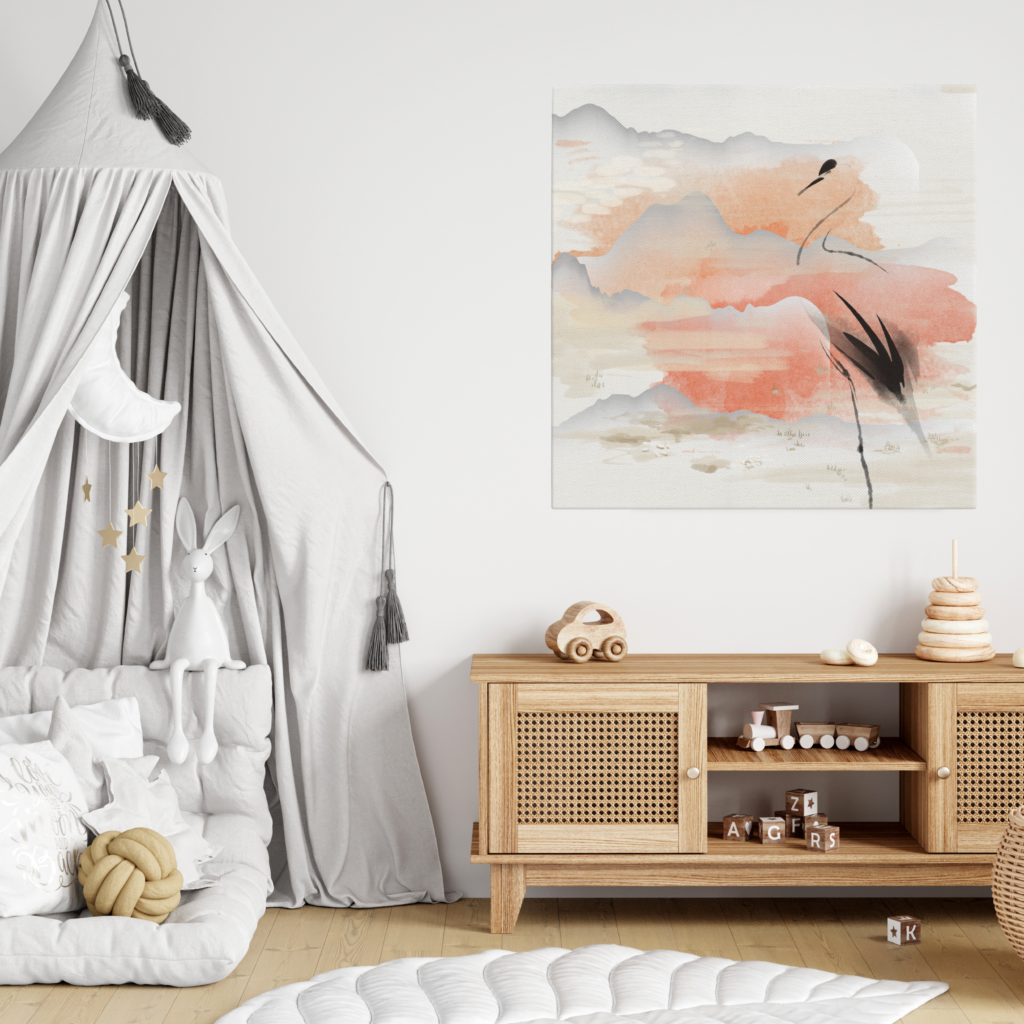
How to make it work: Place a small Sumi-e art piece in your bathroom, where its water-like fluidity complements the space. A bamboo study or koi painting can transform a powder room into a sanctuary.
Entryways benefit from Sumi-e’s welcoming simplicity—it sets a tone of mindful sophistication. In kitchens, pieces depicting herbs, vegetables, or tea preparation add artistry without competing with functional elements.
Scale matters. For smaller areas like bathrooms or hallways, choose intimate pieces (8×10″ to 11×14″). In open-plan kitchens, go larger to create impact that reads from adjacent spaces.
4. Layer Textures to Bridge Old and New
Sumi-e’s ancient techniques gain contemporary relevance when surrounded by modern materials that create dialogue between eras.
How to make it work: Pair Sumi-e art with contrasting textures. Rough concrete walls provide dramatic contrast to fluid brushwork. Smooth white plaster creates a gallery-like backdrop. Even exposed brick works if the wall color is neutral.
Incorporate natural materials that echo Sumi-e’s organic subjects: live bamboo, river rocks in a shallow bowl, chunky linen throws, or raw wood furniture. These create thematic continuity without being heavy-handed.
Consider textiles too. Crisp white bedding, nubby wool pillows, or jute rugs provide textural interest while maintaining the calm palette that lets Sumi-e art be the star.
5. Balance Bold Contemporary Elements with Sumi-e’s Subtlety
Sumi-e’s quietness makes it the perfect counterbalance to bold, contemporary statement pieces.
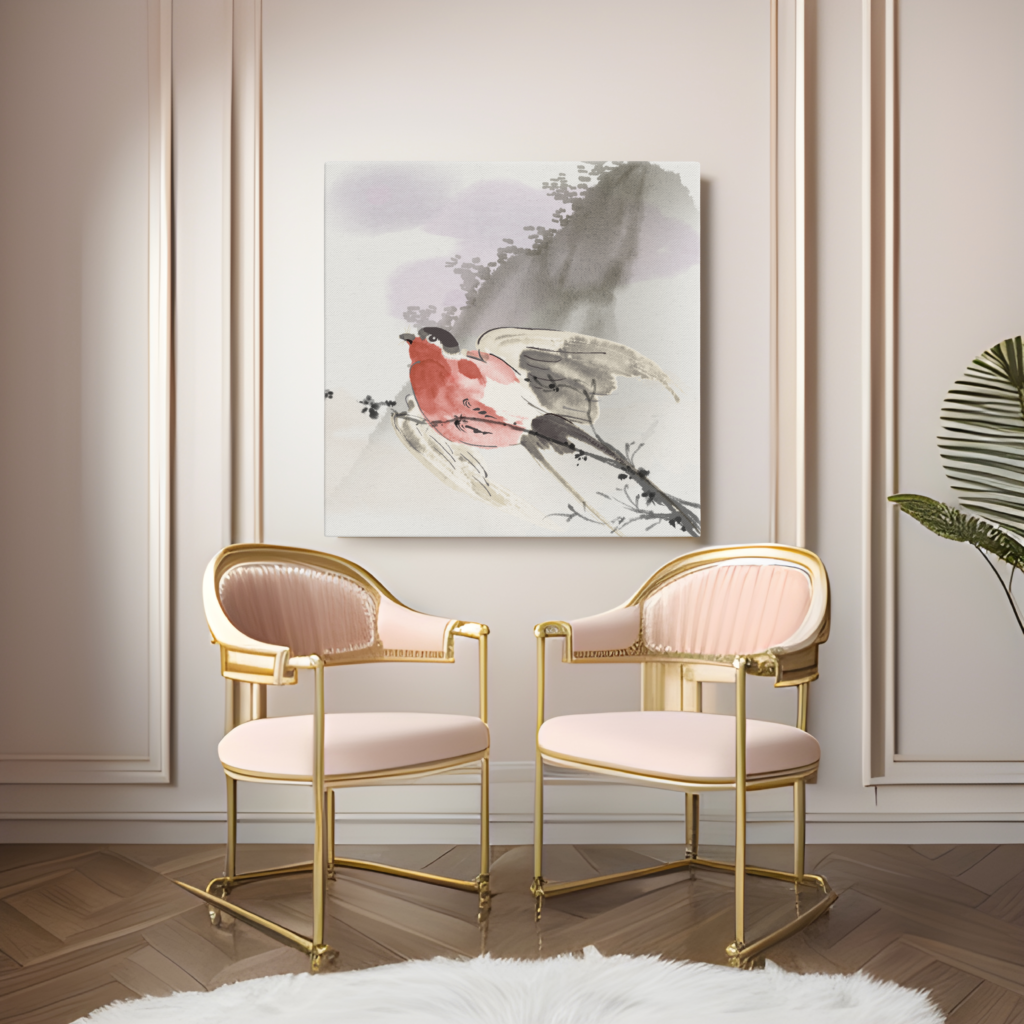
How to make it work: If you have a sculptural modern sofa in a jewel tone or a dramatic light fixture, Sumi-e provides visual rest. The contrast creates dynamic tension—the boldness gets to be bold because the Sumi-e art offers respite.
Think of it as a design conversation. A vibrant emerald velvet chair becomes more striking when paired with a delicate Sumi-e orchid study behind it. A geometric, angular bookshelf gains depth when a Sumi-e landscape introduces organic, flowing lines.
Color theory applies: if your room features saturated colors or busy patterns, choose Sumi-e art pieces with stronger ink concentration and bolder brushwork. They’ll hold their own without escalating visual competition. In minimal spaces, lighter, more ethereal Sumi-e artworks maintain the airy quality.
Bringing It All Together
Sumi-e fits modern spaces because it already embodies what contemporary design values: negative space, natural subjects, and mindful simplicity.
You don’t need to transform your home into a Japanese tea house. The art form is adaptable and forgiving. Start with one piece that speaks to you—bamboo for resilience, plum blossoms for hope, or mountains for perspective. Place it thoughtfully, give it room to breathe, and notice how it changes your space.

The key to keeping Sumi-e from feeling dated is to trust its timelessness. Don’t over-style it with heavy-handed Asian-inspired decor. Let it be what it is: a minimalist artwork that carries centuries of wisdom in its brushstrokes. That kind of quiet confidence never goes out of style.